
Saffron in Perfumery: Safranal, Leathery Warmth, and the Chemistry of Spice
A technical examination of saffron in perfumery: the carotenoid cascade that creates safranal, concentration-dependent behavior, IFRA compliance realities for natural and synthetic materials, and a complete 100-part saffron-leather showcase formula.

Suede Leather in Perfumery: Building a Modern Transparent Leather Accord
A complete technical guide to building a modern transparent suede leather accord: key molecules (Suederal LT, Safraleine, Iso E Super, Isoraldeine 70), proportional logic, the saffron-leather connection, and a 100-part IFRA-compliant formula.
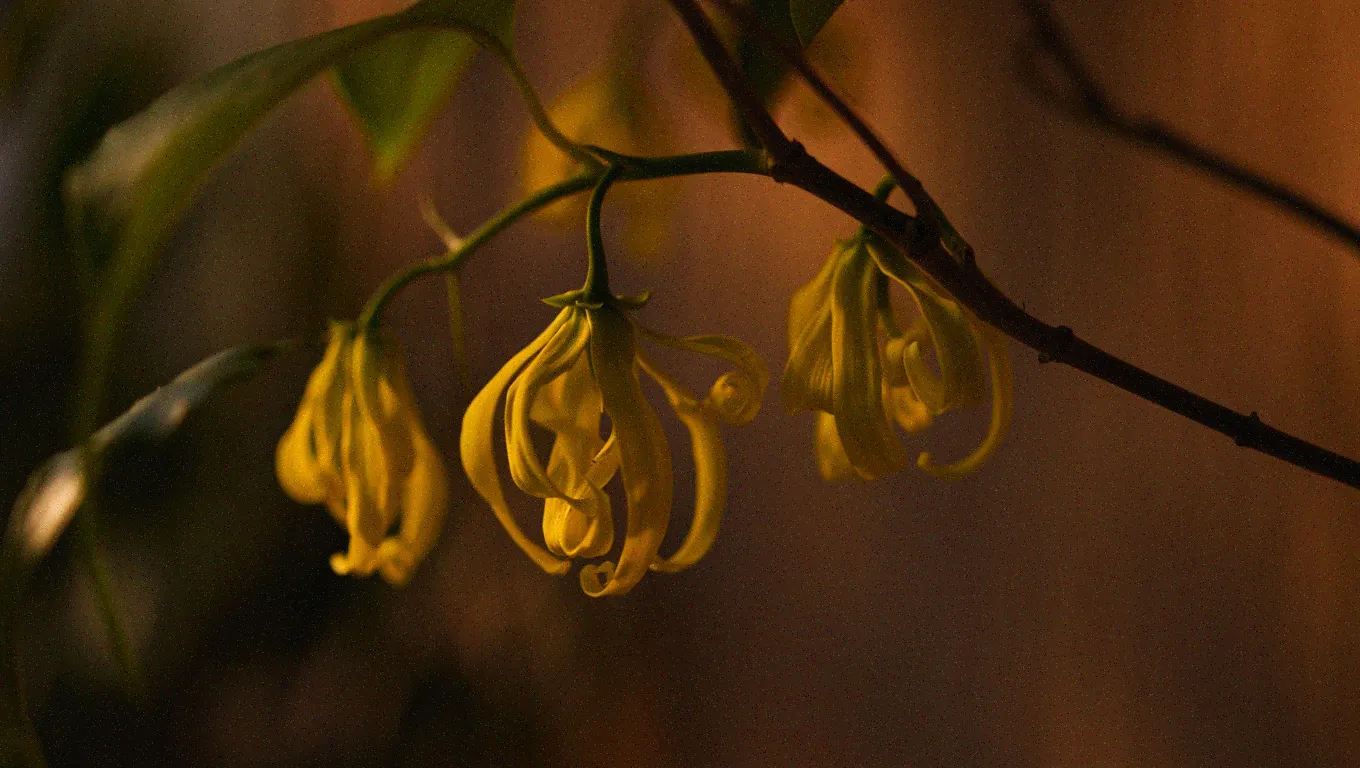
Ylang-Ylang: Narcotic Floral, Green Paradox, and Accord Construction
Ylang-ylang arrives as a finished perfume in a single flower — over 100 molecules creating a narcotic tension between sweet and dark, cream and phenolic. This guide covers its molecular anatomy, the green paradox, modern aromachemicals, and a complete 1000-part substitution formula.

Velvione: the Nitro-Musk Ghost in a Modern Macrocyclic Ring
Velvione (CAS 37609-25-9) is the only non-captive macrocyclic musk with a documented nitro-musk character. This article covers its chemistry, its place in the post-nitro-musk landscape, and a complete 14-ingredient signature accord formula.

Oakmoss Replacers: A Working Perfumer’s Field Guide
A material-by-material guide to replacing oakmoss absolute in modern perfumery, covering Evernyl, Orcinyl 3, IBQ, labdanum, phenolic trace materials, and a complete 19-ingredient IFRA-compliant chypre reconstruction accord with dosing notes and compliance analysis.

Cigar Accord Construction: Tobacco Sweetness, Aged Leaves, and Smoky Resin Chemistry
A technical breakdown of cigar accord construction — covering tobacco fermentation chemistry, smoke phenolics, cedar-humidor layering, leather-animalic materials, and a complete 1000-part professional formula with IFRA 51 compliance notes.

Ozonic Accord Construction: Aldehydes, Marine Synthetics, and Atmospheric Freshness Chemistry
A technical guide to ozonic accord construction covering the marine olfactophore, Calone and Helional chemistry, nine aldehyde-based materials, non-aldehyde ozonic synthetics (nitriles, ethers, formates), and a complete 18-component professional formula with IFRA compliance notes at 20% EdP.
The Anatomy of Crisp: Understanding the Olfactory Edge
Crispness is not a note — it is an emergent perceptual effect produced by volatile molecules, trigeminal stimulation, and compositional contrast. This article maps the chemistry and strategies behind one of perfumery's most sought-after sensory qualities.

Night Veil Structure Analysis: How Darkness Enters the Florals
Night Veil demonstrates how darkness in a floral composition is an emergent architectural property, not a matter of ingredients alone. This analysis traces the four-stage descent from ylang-lavender brightness through jasmine-magnolia twilight to the rose-lotus heart and ginger-oud dusk, with particular focus on blue lotus absolute as compositional pivot and Meghalayan oud as tonal anchor.

Gardenia absolute: capturing the ephemeral white queen
Natural gardenia absolute's scarcity ($20,000/kg at 0.02% yield) has driven sophisticated reconstruction techniques. This technical guide explores gardenia's molecular character across white floral comparisons, essential materials (styrallyl acetate, lactones, tiglates), and a complete professional formulation balancing idealization against naturalistic fungal-earthy undertones.