Gardenia absolute: capturing the ephemeral white queen
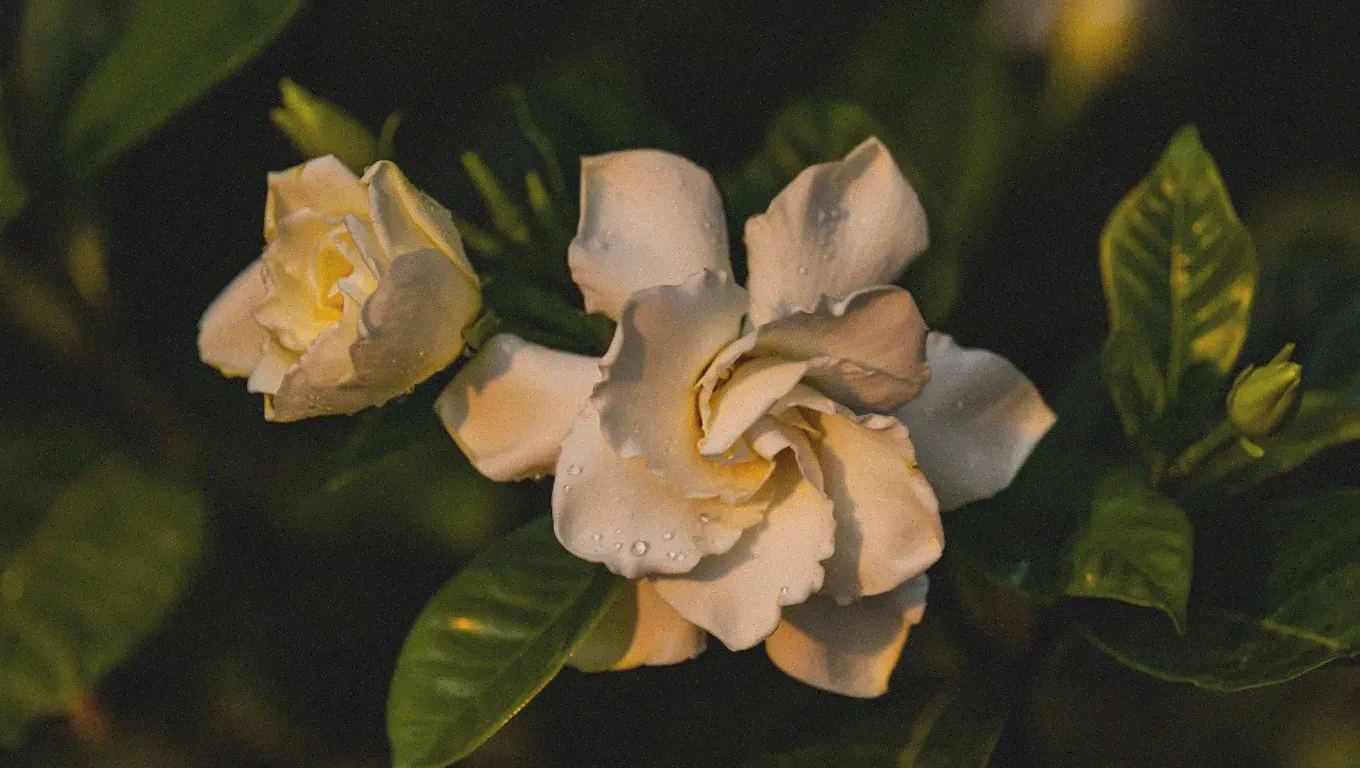
The gardenia remains one of perfumery’s most tantalizing subjects—a bloom whose scent seems to slip through the extractor’s grasp while lingering stubbornly in memory. Natural gardenia absolute, commanding roughly $20,000 per kilogram with yields hovering at a meager 0.02%, exists more as an olfactory reference point than a practical formulation ingredient. Yet this scarcity has driven perfumers toward an intimate understanding of its molecular character, yielding some of the industry’s most sophisticated white floral reconstructions. The materials and techniques developed to capture gardenia’s essence reveal as much about the perfumer’s art as they do about the flower itself.
The scent that blooms twice: understanding gardenia’s evolution
Opening a bottle of true gardenia absolute is to witness a fragrance unfold in temporal layers that few white florals can match. The initial impression arrives as something heady and suave, a statement of pure white petal presence with pronounced waxy facets—that characteristic freshness of petals just unfurling in evening humidity. A slight piquancy registers immediately, almost salicylate in quality, as if the flower were breathing out its first tentative aromatic exhalations.
The heart settles into something more narcotic, where lactonic richness begins to assert itself. Here one finds coconut whispers and peach-skin velvetiness intertwining with an indolic thread that gives the scent its “alive” quality—that unmistakable sense of organic matter in full metabolic bloom. Sharp green and mushroomy undertones emerge in this phase, particularly when sourced from ripe blossoms, lending an almost acerbic counterpoint to the sweetness.
What distinguishes gardenia from its white floral siblings manifests most clearly in the drydown, where it becomes progressively sweeter and more tropical. The lactonic elements intensify, and fruit complexities emerge—apricot-like touches and creamy depths that recall an imaginary hybrid of osmanthus and tiare. Gardenia’s farnesene backbone (comprising nearly 65% of its headspace volatiles) provides this jasminic foundation, while cis-3-hexenyl tiglate contributes those characteristic mushroomy-fungal undertones that render the scent both gorgeous and slightly unsettling.
How gardenia whispers to its white floral cousins
The comparative relationships between gardenia and other white florals reveal a shared molecular vocabulary expressed through distinct dialects. Understanding these relationships proves essential for convincing reconstruction work.
Tuberose and the aldehydic parallel. When evaluating gardenia’s sparkling top notes, tuberose offers the closest reference point—both flowers share an affinity for fatty lactonic compounds that perfumers historically called aldehydes (particularly γ-nonalactone, erroneously labeled “Aldehyde C-18”). However, their opening statements diverge meaningfully. Tuberose’s lift arrives with camphor-menthol facets courtesy of its methyl salicylate content (4-12%), producing that wintergreen sharpness beneath its creaminess. Gardenia’s opening leans toward the classically aldehydic-soapy spectrum of true fatty aldehydes C-8 through C-12, delivering brightness without tuberose’s medicinal undertone. Traditional gardenia bases “revolve around a tuberose note and Aldehyde C-18,” suggesting that tuberose functions as a foundational substrate that gardenia builds upon rather than mimics directly. For comprehensive exploration of tuberose’s unique lactonic-indolic character and professional reconstruction techniques, see our guide on tuberose absolute and modern synthetics.
Ylang-ylang and the green correspondence. The green facets distinguishing gardenia from other white florals find their clearest parallel in ylang-ylang’s opening character. Both flowers present leafy, vegetal attacks that soften into creamy hearts, and both contain significant benzyl acetate proportions that bridge green and floral registers. The distinction lies in quality: ylang-ylang’s green reads as soft banana-leaf tropical, arising from its terpene profile and petal maturity, while gardenia’s green skews sharper, more rhubarb-mushroom-fungal, dominated by styrallyl acetate and its characteristic tiglate compounds. One might describe ylang’s green as breezy where gardenia’s is earthy—almost asparagus-like in its vegetal assertiveness.
Jasmine absolute and the heart connection. Both absolutes share the indolic backbone essential to white floral narcosis, along with jasmine lactone, benzyl esters, and methyl anthranilate’s grape-sweet undertones. Yet their hearts speak differently: jasmine’s hedione content provides its legendary diffusiveness and radiance, that ability to project and fill space without dominating, while gardenia’s heart offers denser, creamier, more lactonic mass that tends to assert itself prominently in compositions. Jasmine blends; gardenia announces. Professional assessments consistently note that gardenia reads heavier, more buttery, with unique fungal undertones absent from jasmine’s cleaner indolic profile. For comprehensive exploration of jasmine’s molecular architecture and the indolic chemistry central to white floral reconstruction, see our analysis of jasmine chemistry and white floral accords.
The reconstructionist’s palette: materials that speak gardenia
Building a convincing gardenia accord requires materials operating across multiple registers simultaneously—the green bite, the lactonic cream, the indolic depth, the fruity tropical development.
Styrallyl acetate remains the cornerstone material, its powerful rhubarb-green character instantly signaling gardenia territory. Discovered in 1902 and sometimes marketed under its romantic name “Gardenol,” this molecule provides the recognizable green attack that distinguishes gardenia from generic white florals. Its harshness necessitates careful modulation—salicylates (particularly benzyl and hexyl) prove essential for smoothing its aggressive edges without eliminating its distinctive bite.
The lactone family delivers gardenia’s creamy, tropical-fruit dimensionality. γ-Nonalactone (“Aldehyde C-18”) contributes intense coconut-peach creaminess with remarkable tenacity approaching 300 hours. γ-Decalactone (sometimes called Decatone) reinforces the ripe peach and apricot facets while adding buttery warmth—Arctander specifically notes its utility in “gardenia and other heavy floral types.” Lactojasmone brings a jasmine-inflected milkiness with additional tuberose and gardenia character; an elegant lactonic substructure often combines this material with Jasmolactone and cis-Jasmone Lactone to build the creamy foundation.
Floropal and Vertacetal coeur (Symrise) represent the acetal approach to gardenia’s fruity-floral register. The enriched single-isomer Vertacetal coeur offers pronounced grapefruit-rhubarb overtones alongside fresh green-floral tonality; suppliers specifically cite gardenia as a target application. These materials provide tart, bitter modulation to the accord’s sweeter elements, with usage ranging from 0.5-10% of concentrate.
The tiglate esters deserve particular attention for achieving naturalistic gardenia character. Cis-3-hexenyl tiglate—comprising roughly 10% of natural gardenia absolute—contributes the mushroom-fungal earthiness that separates photorealistic gardenia from idealized interpretations. Benzyl tiglate offers similar functionality. These materials may alienate consumers expecting purely pretty florals, yet their absence renders gardenia accords somehow hollow, like a conversation missing essential vocabulary.
Hedione functions architecturally (to use the term sparingly), stretching the sweet-creamy gardenia composition and providing the volume and projection that natural gardenia struggles to maintain. At typical usage levels of 2-15% of compound, it creates space between denser molecules while augmenting bloom and sillage.
Indole requires the perfumer’s most delicate hand—at trace levels (below 0.1%), it imparts that sense of living flower essential to white florals; heavier doses tip toward putrefaction. Natural gardenia contains modest indole levels (0.29% in fresh flowers), suggesting restraint yields more realistic results than indolic abundance.
A modern gardenia concentrate: complete formulation
The following accord synthesizes headspace research, traditional formulation wisdom, and contemporary materials into a versatile gardenia absolute replacer. Materials are expressed as percentages of concentrate totaling 100%.
Benzyl acetate.................................. 22.0
Primary floral body; largest component in classic formulas
Phenylethyl alcohol............................. 15.0
Rosy-floral foundation; adds mass without heaviness
Hedione......................................... 12.0
Diffusiveness, volume, and tenacity; opens middle register
Linalool........................................ 8.0
Fresh floral backbone; mirrors natural composition
Styrallyl acetate............................... 6.0
Essential gardenia character; adjust salicylate ratio to taste
Benzyl benzoate................................. 5.0
Soft fixative; balsamic smoothness in drydown
γ-Nonalactone (Ald. C-18)....................... 5.0
Creamy coconut-peach; critical for lactonic heart
Ylang-ylang absolute............................ 4.0
Natural complexity; banana-creamy contribution
Benzyl salicylate............................... 4.0
Softens styrallyl harshness; adds warmth
Methyl benzoate................................. 3.0
Heaviness in top note; characteristic per headspace
Floropal........................................ 3.0
Grapefruit-rhubarb; reinforces green-fruity register
γ-Decalactone................................... 2.5
Peach-apricot creaminess; supports tropical development
Lactojasmone.................................... 2.0
Jasmine-milky-tuberose; essential for creamy depth
Jasmine absolute grandiflorum................... 2.0
Natural indolic richness; authentic white floral core
Cis-3-hexenyl tiglate........................... 1.5
Mushroom-fungal realism; omit for prettier interpretation
Heliotropin..................................... 1.5
Fixative; almond-vanilla softness in base
Methyl anthranilate............................. 1.0
Grape-narcotic sweetness; completes Ellena triad
Alpha-isomethyl ionone.......................... 1.0
Violet-woody depth; enhances floral complexity
Isoeugenol...................................... 0.8
Clove-spice warmth; present in natural absolute
Indole 10% dilution............................. 0.5
White floral life; use restraint
Aldehyde C-11 10%............................... 0.2
Fatty aldehydic lift; sparkling top note
                                                 -----
                                                 100.0
Application notes: This concentrate functions as a direct gardenia absolute replacer at equivalent dosage levels. For more idealized interpretations, reduce or eliminate cis-3-hexenyl tiglate and increase hedione. For enhanced naturalism approaching headspace profiles, consider additions of cis-3-hexenyl benzoate (0.5-1.0%) and α-farnesene (1.0-2.0%), adjusting other percentages accordingly. The styrallyl acetate-to-salicylate ratio rewards experimentation; some noses prefer higher salicylate proportions for smoother effect.
Working with an absent flower
What emerges from gardenia reconstruction work extends beyond technical achievement toward something approaching philosophical inquiry. We pursue a scent that natural extraction barely captures, using molecules whose individual profiles bear little resemblance to the finished accord, yet whose combination triggers recognition in anyone who has stood near a gardenia bush at dusk. The materials catalogued here—from Ellena’s minimalist three-note sketch to complex headspace-informed formulations—represent accumulated craft knowledge about which molecular gestures summon gardenia’s presence.
The practical challenge remains balancing idealization against naturalism. Commercial gardenia accords typically err toward the former, emphasizing creamy-lactonic beauty while minimizing the fungal, vegetal, and indolic elements that render real gardenia slightly unsettling. Niche and artistic applications may embrace the latter, pursuing headspace accuracy even when it produces results consumers might describe as “strange” or “challenging.” Neither approach holds monopoly on validity; both reflect legitimate interpretations of a flower whose complexity resists simple capture.
Perhaps this resistance explains gardenia’s enduring fascination within the trade. Unlike jasmine or rose, whose abundant natural materials provide clear targets, gardenia remains perpetually slightly out of reach—a scent we approach asymptotically through ever more sophisticated molecular assemblages, each iteration revealing new facets while suggesting others still uncaptured. The materials exist. The formulation techniques are known. Yet something in gardenia continues to elude full reconstruction, inviting the next generation of perfumers to attempt their own interpretations of this most elusive white flower.