Benzoin Reconstruction: From Styrax Chemistry to Modern Formulation
The warm, resinous embrace of benzoin absolute can be faithfully reconstructed through a deliberate orchestration of aromachemicals that mirror its molecular soul—sweet vanillic heights floating above a balsamic-cinnamate heart, anchored by resinous depths that whisper of leather and ancient resins. This guide offers the perfumer a comprehensive understanding of benzoin’s chemical architecture and the materials needed to rebuild it from first principles, while navigating the contemporary regulatory landscape.
The molecular fingerprint of Styrax resins
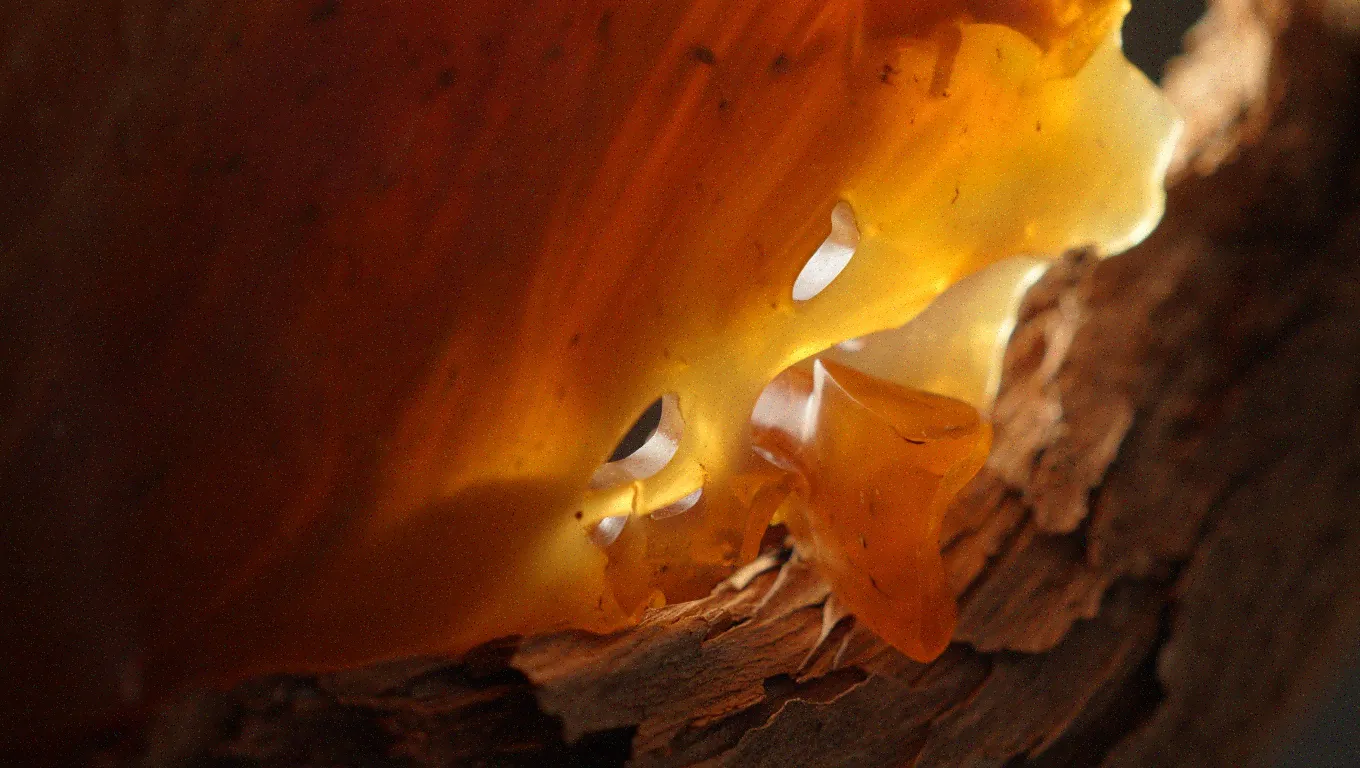
Benzoin absolute emerges from the wounded bark of Styrax trees through a cascade of complex esters, acids, and trace aromatics. The two commercial varieties—Siam benzoin (Styrax tonkinensis) and Sumatra benzoin (Styrax benzoin)—present distinctly different olfactory signatures rooted in their divergent chemistry.
Siam benzoin builds its character predominantly upon benzoate esters. Coniferyl benzoate dominates at 65-75%, creating the fundamental sweet-balsamic impression through its conjugated aromatic system. The methoxy and hydroxyl groups on the coniferyl portion lend warmth and enhance vanilla perception, while the benzoate ester provides the characteristic smooth, rounded balsamic foundation with exceptional tenacity. Vanillin content reaches approximately 5%—sufficient to impart that unmistakable powdery sweetness even at such modest concentrations, given vanillin’s detection threshold as low as 29 parts per billion. Benzyl benzoate at 2-4.6% contributes subtle fixative properties, while p-coumaryl benzoate (10-15%) reinforces the sweet-balsamic architecture.
Sumatra benzoin speaks an entirely different molecular language, built upon cinnamate esters rather than benzoates. Free cinnamic acid at 20-30% provides a distinctly spicy-balsamic punch, while coniferyl cinnamate and cinnamyl cinnamate (styracin) create warm, amber-spiced effects through extended conjugation in their vinyl bridges. Vanillin drops to merely 0.5%, yielding a darker, smokier, more resinous character. Styrene at 2.3% contributes a subtle fresh-phenolic lift, distinguishing Sumatra from its sweeter Siam counterpart.
Minor constituents that shape textural character
Beyond the dominant esters, trace compounds create the nuanced effects that elevate benzoin from simple sweetness to complex character. Leather texture emerges from 4-ethyl guaiacol and guaiacol derivatives—smoky, phenolic notes that add depth without domination. The resinous aura derives from pinoresinol and triterpenoids (siaresinolic acid, oleanolic acid), which, though non-volatile, contribute body and substantivity exceeding 400 hours on smelling strips.
Balsamic warmth flows from coniferyl alcohol, cinnamyl alcohol, and various methyl and ethyl esters that soften transitions and create the characteristic milky, syrupy quality. Powdery sweetness relies not only on vanillin but on supporting actors: acetovanillone with its soft almond facet, coniferyl aldehyde bridging vanilla and spice, and traces of heliotropine lending soft floral-powdery effects.
The structure-activity relationship follows a clear principle: molecular weight governs volatility and texture. Materials in the 100-150 g/mol range (benzaldehyde, vanillin) provide top-note lift, while those exceeding 250 g/mol (coniferyl benzoate at 284, cinnamyl cinnamate at 264) anchor the base with fixative persistence and creamy body.
Aromachemicals for reconstruction: building the palette
The sweet-vanillic foundation
Vanillin remains essential—unrestricted by IFRA and potent at modest concentrations. Usage typically ranges from 0.5-8% in fragrance concentrate, though restraint prevents cloying effects. For enhanced sweetness without discoloration, ethyl vanillin (Bourbonal, Quantrovanil) offers 3-4× the potency with improved oxidation stability; it yields a slightly more transparent, chocolatey effect at 0.5-4%. The combination of both vanillins at varying ratios allows fine-tuning of creaminess versus transparency.
For projects requiring non-discoloring alternatives, propenyl guaethol (Isobutavan) provides vanilla character without phenolic harshness at 0.5-5%, while vanillin acetate at 1-3% contributes a softer, more mellow vanilla with subtle fruity nuance.
Benzoate esters for balsamic structure
Benzyl benzoate (CAS 120-51-4) serves dual purpose: nearly odorless at high purity yet providing the essential balsamic bed and fixative properties that define benzoin. Usage at 2-8% provides solvent functionality and substantivity. The IFRA Category 4 limit of 4.8% necessitates careful calculation across all sources in a formula.
Isoamyl benzoate (isopentyl benzoate) proves particularly valuable—occurring naturally in Siam benzoin, it contributes sweet, fruity-balsamic warmth with waxy, tropical undertones. With no IFRA restrictions and longevity exceeding 90 hours, it performs at 2-15% as a softer, more accessible benzoate alternative.
Cinnamate materials for spicy-balsamic effects
Benzyl cinnamate (Cinnamein) delivers the mild, sweet-balsamic, powdery character essential to benzoin reconstruction, with carnation and amber hints providing complexity. Usage at 2-5% respects the IFRA Category 4 limit of 2.1% while contributing excellent fixative properties. The material solidifies near room temperature (38°C melting point), requiring gentle warming.
Cinnamic alcohol at 0.5-1% sweetens and softens the accord while contributing warm, slightly spicy floral notes reminiscent of hyacinth and lilac. The IFRA limit of 1.2% for Category 4 permits reasonable usage. Cinnamyl cinnamate (styracin) at 1-3% provides deep warm-spicy balsamic effects with floral honey facets—excellent for enhancing the complex heart of benzoin reconstructions.
Balsamic modifiers creating depth
Styrax resinoid (from Liquidambar species only—IFRA specification) adds the dry, smoky, incense-like dimension that distinguishes fine benzoin from simple vanilla-balsam combinations. Usage at 0.5-1.5% respects the IFRA limit of 0.64% while contributing leather and incense facets. Tolu balsam resinoid at 2-4% (typically at 50% concentration in TEC) provides warm complexity with dark jammy plum notes and subtle peppery counterpoint, sharing similar chemistry with benzoin itself.
Labdanum absolute anchors amber accords with smoky, leathery warmth and salted caramel undertones. At 1-3%, it creates the essential bridge between benzoin’s sweetness and more resinous, animalic effects. Peru balsam extracts (not crude, which is prohibited) contribute sweet vanilla-cinnamon effects but require restraint—the IFRA limit of 0.41% for fine fragrance limits its role to accent rather than foundation.
Materials for textural enhancement
Leather texture emerges from several pathways. Guaiac wood oil at 2-5% provides smoky-woody balsamic warmth with subtle tar-like undertones—an excellent benzoin companion. Birch tar rectified at 0.1-0.5% (used heavily diluted) creates authentic Russian leather character through guaiacol and phenolic content. Modern castoreum replacements (Castoreum Givco, dsm-firmenich synthetics) at 0.1-0.5% contribute animalic depth with dried fruit-plum nuances, achieving leathery effects without natural sourcing concerns.
For powdery effects, the combination of coumarin (IFRA limit 1.6%) with heliotropin and the inherent powderiness of benzyl cinnamate creates the talc-like impression of high-quality Siam benzoin.
Navigating IFRA compliance in reconstruction
The contemporary perfumer must architect benzoin reconstructions within regulatory boundaries while preserving olfactory integrity. Benzoin absolute itself lacks direct IFRA restriction, yet its constituent chemicals impose effective limits.
Materials without restriction offer freedom in formulation: vanillin, ethyl vanillin, isoamyl benzoate, and copaiba balsam can be employed generously. These form the unrestricted backbone of compliant reconstruction.
Category 4 (fine fragrance) limits requiring calculation include:
| Material | Maximum | Primary Concern |
|---|---|---|
| Benzyl benzoate | 4.8% | Sensitization |
| Benzyl alcohol | 2.5% | Sensitization |
| Benzyl cinnamate | 2.1% | Sensitization |
| Cinnamic alcohol | 1.2% | Sensitization |
| Cinnamaldehyde | 0.05% | Sensitization |
| Coumarin | 1.6% | Sensitization |
| Styrax | 0.64% | Sensitization |
| Peru balsam extracts | 0.41% | Sensitization |
| Eugenol | 2.5% | Sensitization |
Completely prohibited materials to avoid include crude Peru balsam (only extracts permitted), costus root oil/absolute, fig leaf absolute, and non-specified styrax sources. Only Liquidambar styraciflua or L. orientalis styrax meets IFRA specification.
When employing natural benzoin in formulas, a certificate of analysis proves essential—benzoin containing 80% benzyl benzoate effectively limits its usage to approximately 6% in finished product to remain within the 4.8% benzyl benzoate cap for Category 4.
Professional usage patterns and historic precedents
The Good Scents Company and patent literature reveal consistent patterns in professional benzoin usage. Standard concentrations range from 5-20% in fragrance concentrate, with industry average approximately 1.5% in finished perfume compound. Prada Candy reportedly pushes to 12%—among the highest commercial benzoin concentrations—creating its signature sultry drydown.
The classic amber accord relies upon the trinity of benzoin, labdanum, and vanilla in roughly 5:1:0.5 proportions. Patent formulations from major houses consistently show Siam benzoin resinoid at 8-14% in amber bases, frequently combined with labdanum at 25-40%, vanillin at 5-15%, and coumarin for enhancement.
Demo formulas from professional sources illustrate versatility: benzoin appears at 9% in heliotrope reconstructions, 10% in mimosa accords, 14% in fougère bases, and 5% in tobacco compositions. The common thread: benzoin rarely dominates but rather integrates and extends, earning its reputation as “olfactive bridge” smoothing transitions between fragrance phases.
A working benzoin replacer accord
The following formulation replicates benzoin absolute’s complete olfactory signature while maintaining IFRA compliance for fine fragrance (Category 4). Designed as a direct substitution, this accord may be employed at concentrations matching intended benzoin usage.
Benzoin Absolute Replacer — Sweet-Balsamic Reconstruction
Sweet-Vanillic Foundation (32%)
Vanillin...................................... 12%
Ethyl vanillin................................  5%
Benzyl benzoate............................... 15%
                                              ----
                                               32%
Balsamic-Cinnamate Heart (38%)
Benzyl cinnamate..............................  8%
Isoamyl benzoate.............................. 12%
Tolu balsam resinoid 50%......................  8%
Cinnamic alcohol..............................  2%
Ethyl cinnamate...............................  4%
Cinnamyl cinnamate 50%........................  4%
                                              ----
                                               38%
Resinous-Textural Base (25%)
Labdanum absolute............................. 10%
Styrax resinoid...............................  3%
Guaiac wood oil...............................  6%
Peru balsam oil...............................  2%
Coumarin......................................  4%
                                              ----
                                               25%
Depth Enhancement (5%)
Castoreum synthetic...........................  1%
Olibanum CO2..................................  2%
Opoponax resinoid.............................  2%
                                              ----
                                                5%
                                              ====
                                              100%
Characteristics: Sweet-warm opening from the vanillin combination, developing into balsamic-spicy heart reminiscent of Siam benzoin, with smoky-leathery undertones and exceptional tenacity. The absence of natural benzoin allows cleaner production while the labdanum-styrax-castoreum complex creates the resinous depth often attributed to high-quality absolutes.
Suggested usage: 8-15% in fragrance concentrate, mirroring typical benzoin absolute concentrations. The accord requires 2-3 weeks maturation for optimal integration.
IFRA Compliance verification (at 10% usage in fine fragrance)
| Restricted Material | % in Accord | % in Final | IFRA Limit | Status |
|---|---|---|---|---|
| Benzyl benzoate | 15% | 1.5% | 4.8% | ✓ Compliant |
| Benzyl cinnamate | 8% | 0.8% | 2.1% | ✓ Compliant |
| Cinnamic alcohol | 2% | 0.2% | 1.2% | ✓ Compliant |
| Styrax resinoid | 3% | 0.3% | 0.64% | ✓ Compliant |
| Peru balsam | 2% | 0.2% | 0.41% | ✓ Compliant |
| Coumarin | 4% | 0.4% | 1.6% | ✓ Compliant |
The formulation permits usage up to 15% in concentrate while maintaining full Category 4 compliance.
Variations for specific olfactory intentions
For enhanced leather character, increase styrax to 5%, add birch tar rectified at 0.5%, and introduce isobutyl quinoline at 0.2%. This shifts the accord toward Sumatra benzoin’s darker profile.
For gourmand sweetness, emphasize the vanillin combination (15% vanillin, 8% ethyl vanillin), reduce styrax to 1%, and add 3% heliotropin. The result suggests caramelized vanilla-balsam without animalic depth.
For incense-oriented applications, reduce vanillins by half, increase olibanum to 5%, add 2% myrrh resinoid, and incorporate 1% pyrogenized (burned) frankincense for authentic ecclesiastical resonance.
Synthesis and application principles
The reconstruction of benzoin demonstrates a fundamental principle: the olfactory impression emerges from molecular interaction rather than single-compound presence. Vanillin provides sweetness, but only the cinnamate esters create balsamic warmth. The benzoate backbone delivers tenacity, yet leather emerges from trace phenolics. Labdanum bridges toward amber, while coumarin mysteriously enhances vanilla perception—”making vanillin more vanilla-y,” as perfumers observe.
Professional formulation reveals benzoin’s dual nature as both character material and modifier. At 2-5%, it functions invisibly as fixative and blender, extending top notes while smoothing rough transitions. At 8-15%, benzoin declares itself—the warm, powdery resinous signature of great orientals from Shalimar to Opium to contemporary gourmand compositions.
The reconstruction offered here captures this duality. Employed judiciously, it provides the essential benzoin effect while offering the perfumer complete control over regulatory compliance, batch consistency, and cost optimization. The resulting accord breathes with the same warm, balsamic soul that has anchored oriental perfumery for a century—now rebuilt molecule by molecule for the contemporary atelier.