Ambrettolide: The macrocyclic musk that revolutionized modern perfumery
Natural ambrette seed absolute—one of perfumery’s most treasured materials—costs approximately €9,000 per liter with global production limited to just 60 tons annually. This scarcity catalyzed the development of synthetic ambrettolide, now considered the gold standard among macrocyclic musks. Unlike banned nitromusks or environmentally problematic polycyclics, ambrettolide offers perfumers a biodegradable, unrestricted material that captures the essence of natural ambrette while providing superior stability and cost-effectiveness at approximately $800/kg.
Natural ambrette seeds contain the blueprint for synthetic success
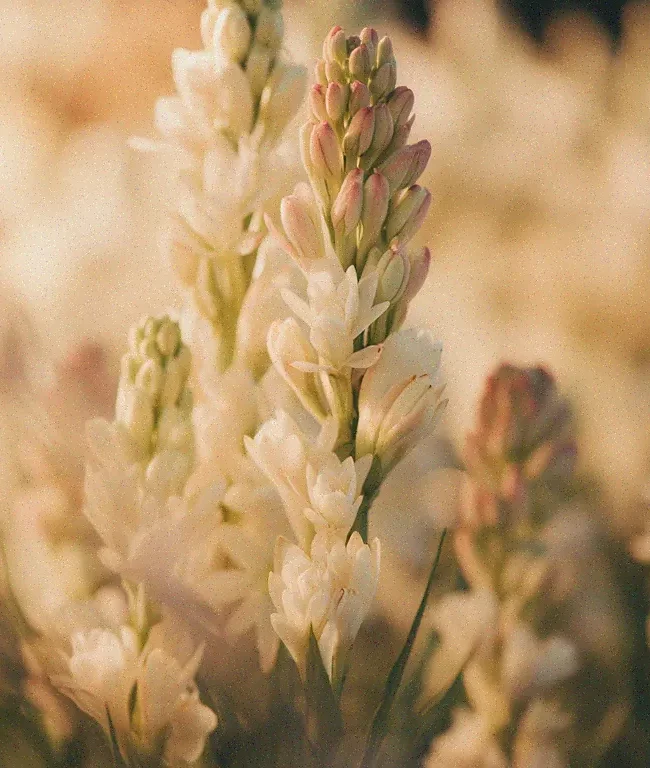
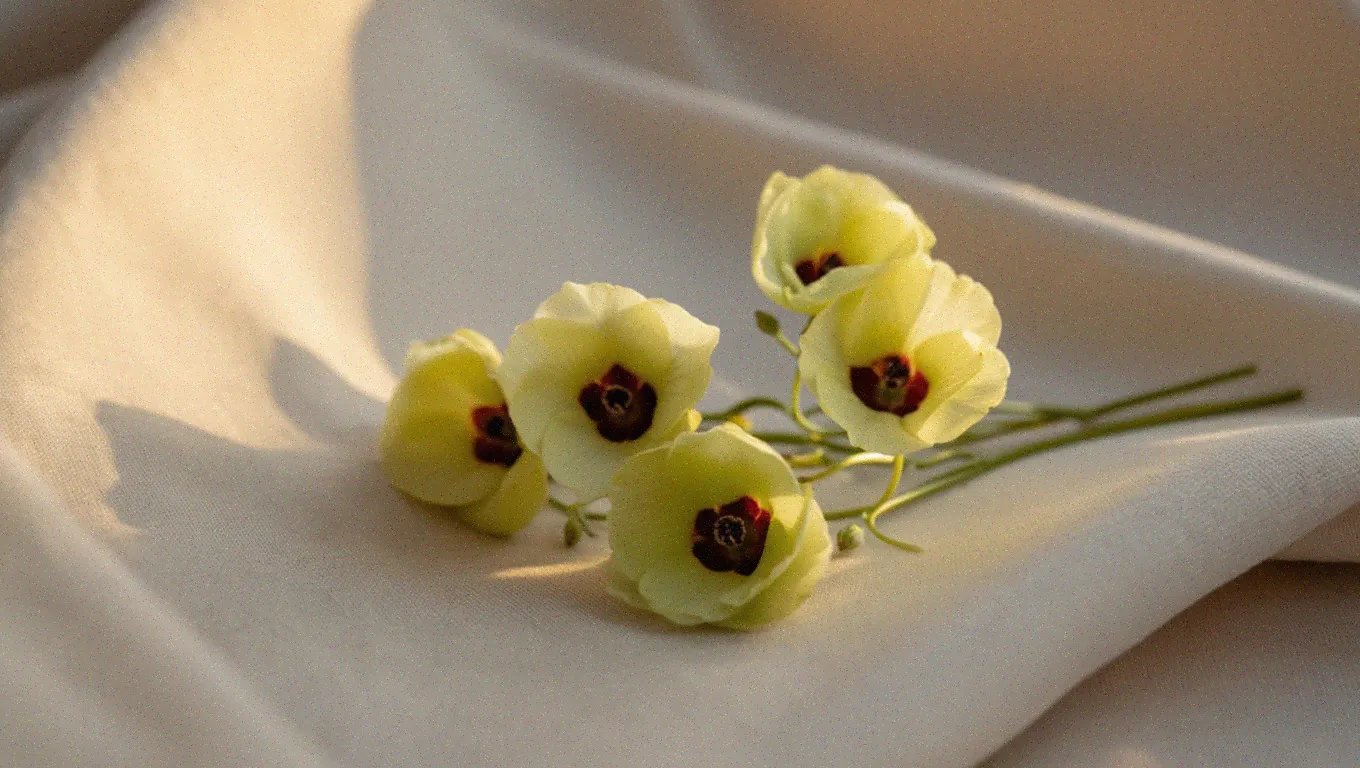
The seeds of Abelmoschus moschatus (musk mallow) yield an extraordinarily complex aromatic material through steam distillation or CO2 extraction, though at painfully low yields of just 0.2-0.6% by weight. GC-MS analysis reveals farnesyl acetate dominating at 51-67% of the oil, but the characteristic musk character derives from ambrettolide and its homologues comprising 5-18% of the essential oil.
Professional organoleptic descriptors paint a multi-dimensional portrait. The suppliers list ambrette absolute as exhibiting dry, woody, musk, amber, hay, and tobacco characteristics with substantivity exceeding 332 hours. Givaudan’s technical documentation describes “earthy facets, fleeting nutty notes with silky fruity undertones and liquor nuances” that evolve “into a powdery floral note of orris.” IFF characterizes it as having a “cognac top note on a warm powdery orris bottom note.”
Sylvaine Delacourte, former Guerlain perfumer, captures the material’s mystique: “Ambrette is the champagne of scents… It is a base note, but it is so vibrant that you can feel its scent from the top notes.” This phenomenon—the legendary “exalting effect” first documented by Arctander in 1960—describes ambrette’s unique ability to lift and enhance surrounding notes while simultaneously providing fixative power.
Ambrettolide offers exceptional diffusion without regulatory constraints
Synthetic ambrettolide (iso-ambrettolide, CAS 28645-51-4) presents as a colorless to pale yellow viscous liquid with molecular formula C₁₆H₂₈O₂ and molecular weight 252.4 g/mol. The 17-membered macrocyclic lactone ring structure provides superior oxidative stability compared to the natural isolate while maintaining the characteristic organoleptic profile.
The material’s regulatory status represents a significant advantage for formulators. Under IFRA 51st Amendment, ambrettolide carries no quantitative restrictions for any category, including Category 4 fine fragrance. ECHA classifies it as non-hazardous with low aquatic toxicity, and it achieves full REACH compliance without SVHC designation. Givaudan confirms 100% renewable carbon content and ready biodegradability—a stark contrast to problematic polycyclic musks that bioaccumulate in human tissue and aquatic environments.
Max Kerschbaum first identified the natural compound in 1927, while Leopold Ruzicka’s pioneering synthesis work on macrocyclic compounds contributed to his 1939 Nobel Prize. IFF secured key patents in the early 1970s (US Patent 3,681,395), establishing modern production methods. Today, major manufacturers include IFF, Givaudan (Giv Code: 1832003), and Symrise (Product #140022), with numerous global distributors serving the industry.
Technical performance makes ambrettolide the perfumer’s workhorse musk
Givaudan’s official description captures the material’s extraordinary versatility: “Ambrettolide is a macrocyclic musk with an exceptional diffusion and a very fine character. It is unique in that its influence in a composition can be perceived at all evaporation levels. It is a superb fixative and highly substantive, and yet exalts the top note of a fragrance in an exceptional manner.”
Professional usage guidelines recommend traces to 2% in fragrance concentrates, with 0.5% representing average use. At concentrations as low as 0.01% in diluted alcohol, ambrettolide practically eliminates alcohol odor, leaving only a faint floral-musky sweetness—a property unmatched by other synthetic musks. Substantivity exceeds 248 hours at 100% concentration, with blotter tenacity extending to one month.
IFF describes the organoleptic profile as “intensely powerful substantive musk odor with depth and richness” featuring “floralcy and red fruit sweetness.” Symrise characterizes it as a “typical macrocyclic musk fragrance, soft musk-like, reminiscent of elements in ambrette seed oil, with woody, ambergris and floral shades.” When overdosed, perfumers note the emergence of berry-like or Williams pear nuances—echoing the natural material’s characteristic fruity facets.
Notable fragrances featuring ambrettolide include Le Labo Ambrette 9, Chanel No. 18, Byredo Velvet Haze, Diptyque Fleur de Peau, and Nasomatto Silver Musk. The material appears consistently in contemporary “skin scent” and intimate musk compositions.
Comparing synthetic ambrette materials reveals clear winners
Ethylene brassylate (CAS 105-95-3, MW 270.37) remains the industry workhorse—a macrocyclic diester producing over 1,000 metric tons annually at approximately $15/kg. Gerard Mosciano described it as “powdery, sweet, floral and ambrette-like with woody, spicy and vanilla nuances.” IFRA 51 permits unrestricted use, making it ubiquitous in both fine and functional fragrances. The material lacks ambrettolide’s fruity-seedy complexity but provides exceptional tenacity exceeding 200 hours.
Tonalide (CAS 21145-77-7, MW 258.40) represents the polycyclic musk class—chemically distinct from macrocyclics and increasingly problematic. While still widely used (particularly in fabric care for its substantivity), Tonalide faces mounting environmental scrutiny. ECHA classification as potential PBT/vPvB reflects detection in Swiss alpine lakes, human blood, breast milk, and adipose tissue. IFRA maintains category-specific restrictions, and industry movement favors macrocyclic alternatives.
Versalide (CAS 88-29-9) and Musk Ambrette (CAS 83-66-9) warrant mention only historically—both are IFRA-prohibited. Versalide’s neurotoxic effects, documented by Spencer et al. in 1979, produced “spectacular myelin bubbling” in nervous system tissue. Musk Ambrette, despite being called “the absolute finest of the nitro musks” and used extensively in classics like Brut and Canoe, was banned following photoallergenicity and neurotoxicity findings. These materials’ removal accelerated industry adoption of safer macrocyclic alternatives.
| Material | CAS | MW | IFRA Status | Approx. Cost/kg |
|---|---|---|---|---|
| Ambrettolide | 28645-51-4 | 252.4 | Unrestricted | $800 |
| Ethylene Brassylate | 105-95-3 | 270.4 | Unrestricted | $15 |
| Tonalide | 21145-77-7 | 258.4 | Restricted | $12 |
| Versalide | 88-29-9 | 258.4 | Prohibited | N/A |
| Musk Ambrette | 83-66-9 | 268.3 | Prohibited | N/A |
Ambrette and amber are fundamentally different note families
Professional confusion between these phonetically similar terms persists despite their completely distinct olfactory identities. Ambrette belongs to the musk family—derived from plant seeds, characterized by macrocyclic lactone chemistry, functioning as an intimate skin-like fixative with exalting properties. Amber describes a fantasy accord—a constructed blend evoking fossilized amber’s warm golden appearance, built on labdanum resin, vanilla, and benzoin.
The molecular distinction proves absolute. Ambrette’s signature compound, ambrettolide, is a 17-membered ring lactone (C₁₆H₂₈O₂). Amber accords derive character from labdane-type diterpenes (C₂₀H₃₂) including labdanolic acid and cis-abienol, combined with benzoic acid derivatives from benzoin and vanillin.
Functionally, ambrette provides intimate skin-scent warmth with lifting, bridging qualities between notes. Amber creates Oriental warmth and opulent depth as base foundation. The etymological connection exists—both terms derive from French/Arabic “ambre,” with ambrette seeds historically described as exhaling “a scent between amber and musk”—but the aromatic materials serve entirely different compositional purposes.
Formulation strategies maximize ambrettolide’s potential
Fraterworks articulates the essential pairing: “If you could only ever possess two musks, they would be Exaltolide and Ambrettolide.” This combination provides both the angelica-like floral character of exaltolide and ambrettolide’s fruity-seedy refinement, creating foundations for virtually any musk-forward composition.
A proven white musk accord demonstrates effective proportions:
Exaltolide.................................... 60 parts
Ethylene Brassylate........................... 20 parts
Ambrettolide.................................. 15 parts
Habanolide.................................... 6 parts
For amber accords, one Basenotes formula offers an optimized approach:
Ambrettolide.................................. 25 parts
Labdanum...................................... 20 parts
Ambroxide..................................... 15 parts
Ethyl Vanillin................................ 2 parts
(Evaluate at 20% in ethanol)
Orris synergies prove particularly elegant. Natural ambrette dries down to a “powdery floral note of orris,” making combinations with irones, orris butter, and iris absolute exceptionally cohesive. Providence Perfume Co.’s Irisqué demonstrates this pairing with ambrette seed absolute, Italian orris, labdanum, vanilla, and ambroxan. Professional formulas suggest ambrettolide at 1.5-2% alongside iris absolute synthetics and supporting exaltolide.
White floral combinations benefit from traces of Velvione alongside ambrettolide, creating ideal backdrops for jasmine, ylang-ylang, gardenia, and magnolia. The material’s capacity to enhance without overpowering makes it invaluable for delicate floral hearts.
Practical considerations for working perfumers
Working dilution: Standard protocol recommends 10% ambrettolide in ethanol for evaluation, allowing full character development within approximately 30 minutes. The material’s colorless liquid form requires no special handling beyond standard fragrance ingredient protocols.
Anosmia awareness: Ambrettolide’s large molecular size (252 Da) causes specific anosmia in a significant percentage of the population. Test strips evaluated by multiple noses help ensure proper dosing, as a perfumer unable to detect the material might inadvertently overdose.
Aging requirements: Amber accords and musk bases benefit from extended maceration—1-6 months for optimal development. All alcoholic fragrances should macerate at least one month before chilling overnight and fine filtering.
Storage differences: Synthetic ambrettolide remains stable at room temperature, while natural ambrette materials require refrigeration to prevent fatty acid oxidation and rancid off-notes.
Top note suppression: Excessive ambrettolide can dampen volatile top notes. Begin at 0.5% or lower, increasing only after evaluating the full dry-down.
Conclusion
Ambrettolide represents the perfumery industry’s most successful translation of a precious natural into a sustainable, compliant synthetic. Its unrestricted IFRA status, biodegradability, and renewable carbon profile position it as the macrocyclic musk of choice for contemporary formulation. At typical usage levels of 0.5-2%, it provides the characteristic ambrette exalting effect—lifting compositions while anchoring them with tenacious warmth—at approximately one-tenth the cost of natural absolute.
For perfumers building musk foundations, the combination of ambrettolide with exaltolide creates exceptional versatility. For those reconstructing vintage compositions that relied on banned nitromusks, ambrettolide offers the closest olfactory approximation with modern safety credentials. Its synergies with orris materials and white florals open sophisticated accord possibilities that justify its position as an essential material in the contemporary perfumer’s palette.