

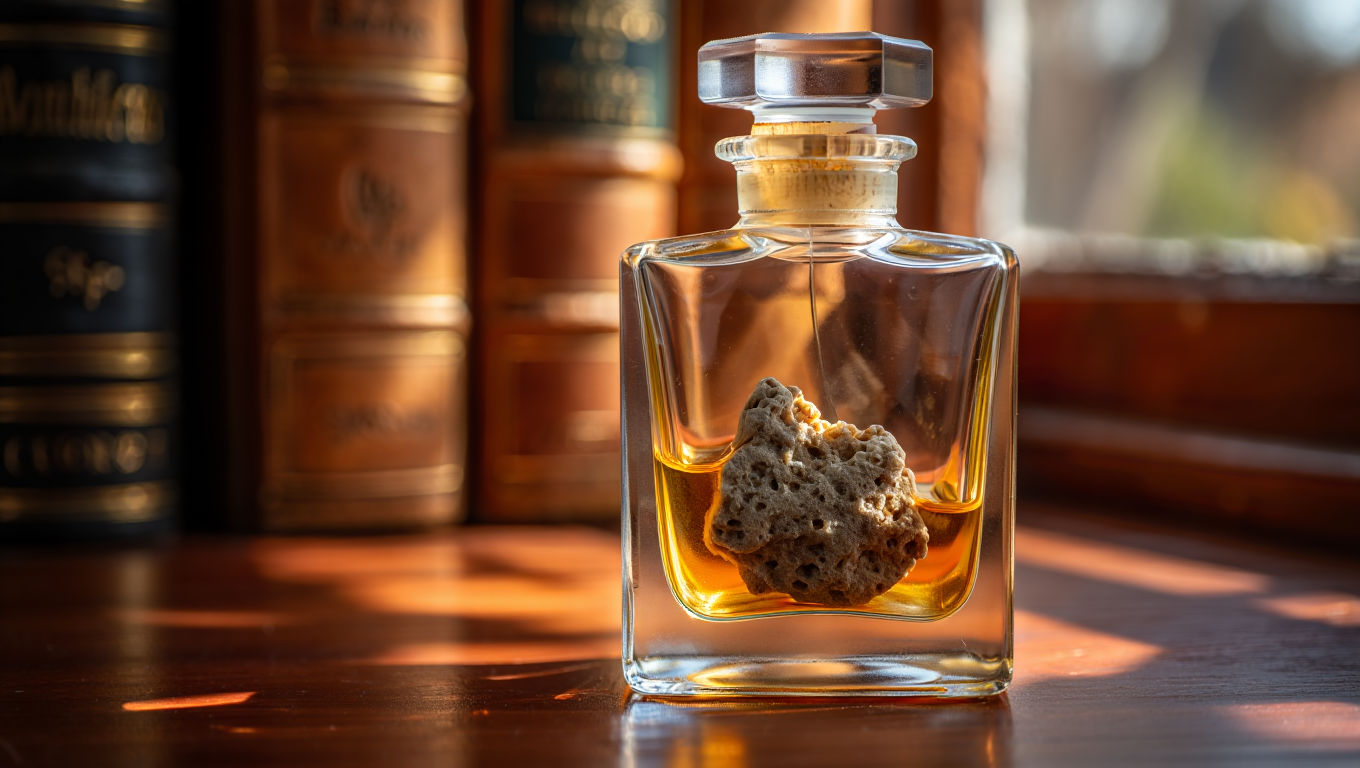
Aging and Maturation in Natural Perfumery
Recently, I wrote about oxidation in perfumery and why it can compromise a perfume. Over time, every fragrance undergoes changes, a series of reactions collectively referred to as “maturation.” While oxidation is not the only factor, it plays a crucial role. Once a perfume completes its dangerous phase of chemical transformations and emerges without losing its aromatic properties, it can remain stable for years—often transforming into a rare “vintage” treasure with a superb, time-honed aroma.
On the one hand, oxidation can indeed damage many perfume components. Yet there are exceptions. Certain natural raw materials only improve with age and, as a result, become much more expensive. Adding such materials to a perfume can significantly enhance its quality but also raises production costs. Maturation, in this sense, is a stage within the ongoing process of change—leading toward a refined “peak” or stable aroma profile.
It is a well-known practice among perfumers not to incorporate freshly prepared tinctures of materials like ambergris, musk, or civet directly into their blends. Instead, these tinctures are typically aged for a prolonged period—sometimes up to a year or more—before being used. Freshly made tinctures can continue to evolve within the final fragrance, risking unexpected changes during its own maturation. By ensuring these extracts have stabilized, perfumers can better predict the perfume’s behavior over time.
Aging phenomena are also prominently observed in floral pommades, obtained through enfleurage or maceration. Initially, these pommades have a weak or imprecise scent—an almost “youthful” phase lasting around six months. After that, the fragrance blooms into its “mature” stage, displaying its full strength and beauty. This maturity peaks around one year and can remain stable for up to five or ten years. Beyond this point, a rapid decline or “old age” sets in, diminishing the aromatic quality.
One notable example is orris butter, derived from the root of the iris. In the first month of production, it may have virtually no scent. The earliest hints of its floral notes reminiscent of violets appear only after about three months. Once matured, orris can maintain its fragrance for decades. However, if subjected to further aging, especially under sunlight, it can develop a sour or even bitter smell, reducing its perfumery value.
Sandalwood oil offers another compelling case. Rich in unsaturated acids, its slow oxidation generates peroxides, which impart beautiful, amber-like nuances. Over time—potentially decades—aged sandalwood becomes so exquisite (and expensive) that it is rarely used in mass-market perfumes, being reserved instead for high-end, artisanal creations. Interestingly, the peroxides contributing to the amber note in sandalwood oil are found in high concentrations within so-called “fossil amber” oil, formed from the oxidized resins of ancient conifer trees. However, fossil amber oil is both costly and relatively toxic due to its high peroxide content. As a workaround, some companies artificially treat cistus (labdanum) oil with active oxygen to achieve a somewhat comparable aromatic profile.
The undisputed “king” of aged perfume materials, however, is ambergris. Although whale ambergris can float on the ocean for decades—exposed to light, air, and heat—this natural process alone does not fully bring out its luxurious aroma. Broadly speaking, ambergris is classified into black, grey, and white types according to how extensively it has been oxidized. Black ambergris has undergone minimal oxidation and retains a harsh, not particularly pleasant smell. White ambergris, on the other hand, owes its lighter color to extended environmental exposure and exhibits a refined, sensual aromatic profile. Even then, perfumers often tincture it for 18 to 24 months in sunlight before it reaches its celebrated depth and warmth—a point at which it shows true perfumery value.



timothy
January 15, 2026
I’m experimenting with a scent that I like for many reasons…ozone
using ozonated hemp oil as a small percentage of a mix of essential, mostly woods and some flowers.
do you think the ozonated oil could effectively enhance scents that mature via oxidation?
akimkelar
January 15, 2026
Ionized oxygen, which ozone can serve as a source of, is a very active substance that can react with any components and destroy them. With this type of maceration, the fragrance can either disappear or deteriorate (becoming more rancid and musty). But most dangerously, active oxygen can form peroxides, which are very hazardous substances for our skin and are prohibited by IFRA.
Perfumers use more predictable and controllable reactions during perfume maceration, such as the Schiff reaction (Schiff base formation), where an aldehyde or ketone reacts with an acid. This reaction is reversible.
If you like the smell of ozone (which is indeed caused by the presence of active oxygen), I would advise you to look toward aldehydes, where oxygen exists in a sufficiently polarized state. And indeed, aldehydes such as melafleur (IFF), precyclemone B (IFF), floralozone (IFF), scentenal (Firmenich), and heptanal (aldehyde C-7) have very pronounced ozone notes.
timothy
January 15, 2026
I have found golf ball sized fragrant resins in the ground around the trunks of trees that have died in the distant past leaving only dust and sun bleached fragments and someday would like to extract the scents. burning it like incence produces amazing exotic smells similar to myrrh and frankincense, but I think it would be wasteful to burn it. the best i can do to id the tree is to generalize it as strax or related.
akimkelar
January 15, 2026
Natural resins are magnificent raw materials for exquisite fragrances. I myself was once passionate about collecting cedar resin, from which over time (after prolonged drying) it was possible to obtain interesting amber and even musky aromas. However, such materials must, unfortunately, be tested for the presence of irritants.