A Spicy Carnation Accord with Powdery Veils
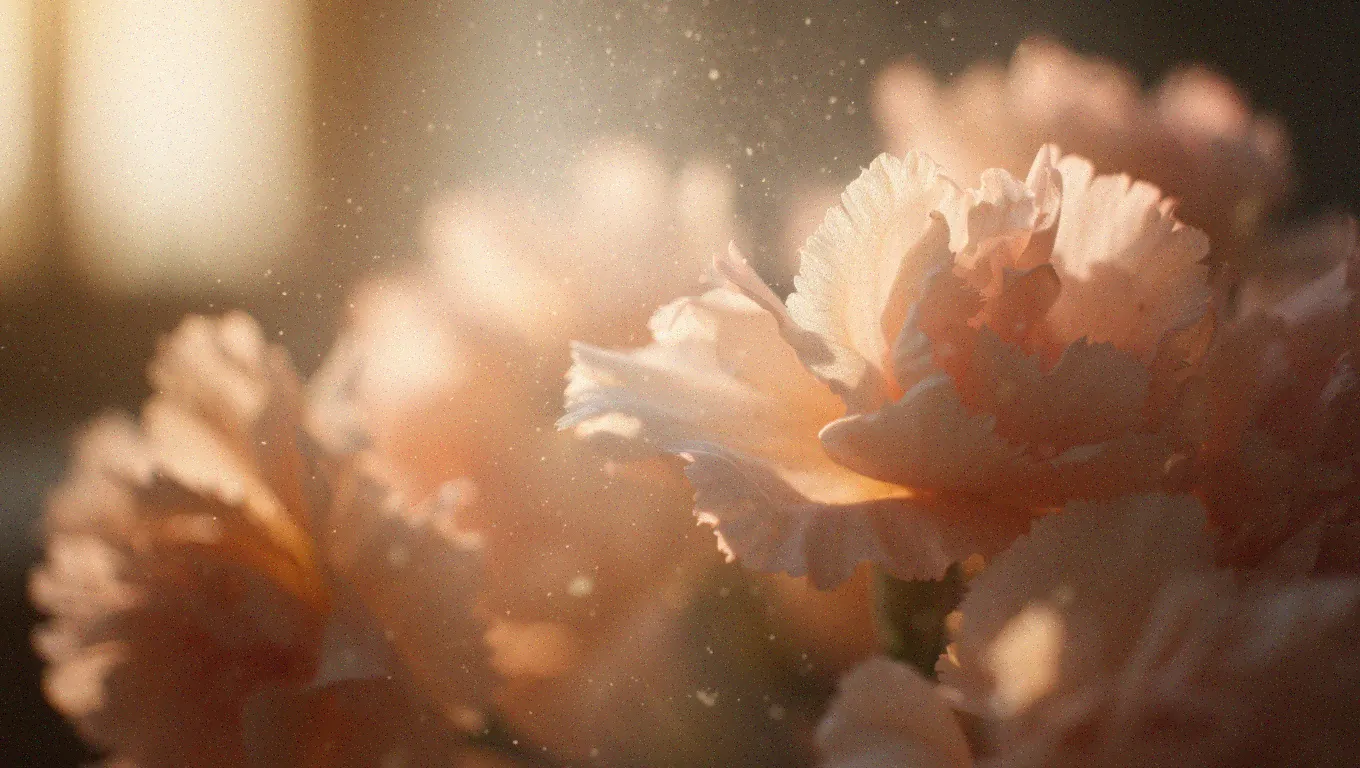
The soft collision of clove and carnation creates one of perfumery’s most seductive contradictions—a flower that smells of spice, a spice that blossoms into florality. This research develops an IFRA-compliant accord that wraps this classic pairing in a diffuse, cloudy powderiness: imagine carnation petals pressed between pages of old books, dusted with violet powder, warmed by distant embers.
The vision demands three interlocking layers: a eugenol-forward spicy heart that pulses with authentic carnation character; a generous powdery envelope of ionones and soft woods that creates the “dusty veil” effect; and a dry, mineral-amber foundation that grounds without heaviness. The challenge lies in achieving sufficient powdery diffusion while preserving the carnation’s assertive spicy-floral identity.
The carnation core: methyl diantilis and the eugenol family
At the heart of any serious carnation construction sits methyl diantilis (CAS 5595-79-9), Givaudan’s elegant isoeugenol alternative that sidesteps the severe IFRA restrictions haunting natural carnation materials. Where isoeugenol is now capped at a mere 0.11% in fine fragrance (Category 4), methyl diantilis carries no IFRA restriction whatsoever, delivering sweet spicy-floral carnation character with creamy vanilla undertones at concentrations up to 3%.
The organoleptic profile shifts with dosage: at traces, a soft powdery sweetness; at 1-2%, the full spicy-sweet carnation expression emerges with evident clove and vanilla facets. The material offers 400+ hours tenacity on blotter—exceptional fixative power wrapped in a refined olfactory signature. Professional formulations now routinely employ methyl diantilis at 15-20% of carnation bases when seeking vintage character within modern regulatory constraints.
Eugenol (CAS 97-53-0) remains the indispensable spicy backbone, though IFRA limits it to 2.5% in finished products. The material’s warm, sweet clove character anchors the accord with phenolic depth impossible to replicate synthetically. In concentrate terms, this translates to roughly 12% maximum at standard dilution factors—generous enough to build authentic carnation presence.
Supporting materials that extend the eugenol-isoeugenol effect include:
- Isoeugenyl acetate (CAS 93-29-8): softer, sweeter, excellent extender at 0.99% IFRA limit
- Dihydroeugenol (CAS 2785-87-7): drier, fresher, adds clarity
- Clove bud oil (CAS 8000-34-8): natural richness from 8-15% eugenyl acetate content, used at 1-3%
Guaiyl acetate emerges as the preferred woody support
The choice between guaiac wood oil and guaiyl acetate fundamentally shapes the accord’s woody character. Guaiac wood oil (CAS 8016-23-7) brings pronounced smoky-meaty facets that can overwhelm delicate floral-spicy balances—useful in darker orientals, but risky for a carnation accord seeking powdery transparency.
Guaiyl acetate (CAS 134-28-1) proves the superior choice for this vision. The material presents a distinctive tea-rose woodiness without smoke interference, carrying no IFRA restriction in Category 4. Its relative weakness—perfumers describe it as “barely perceptible” at lower concentrations—becomes an advantage here: it can be dosed generously (2-4%) to create supportive woody presence without dominating the carnation heart. The tea-rose facet actively harmonizes with carnation’s natural rose-family character, bridging the spicy core to floral modulators.
The material demonstrates 300+ hours tenacity with camphoraceous woody emergence at 6+ hours drydown, eventually settling into herbal freshness. This long evolution creates interest without disruption—the accord breathes differently across hours rather than presenting static snapshots.
Amberwood forte creates the ideal dry, dusty foundation
Among amber-woody bases, Amberwood Forte (CAS 58567-11-6, Symrise) best achieves the “dry, dusty, cloudy aura” this accord demands. Where Karmawood (IFF) presents aggressive driftwood-mineral sharpness and Ambermax (Givaudan) delivers overwhelming radiant power, Amberwood Forte offers balanced dry cedarwood-amber character at moderate strength—rating 5/10 versus Ambermax’s punishing 10/10.
Perfumer’s Apprentice describes the material specifically as “woody cedar ambergris dry dusty amber”—the exact quality this formulation pursues. The moderate potency permits higher dosing (0.5-5% in concentrate) for enveloping cloud effect rather than sharp spike. IFRA restricts it to 1.5% in finished product, allowing approximately 7.5% in concentrate at typical dilution.
Comparative positioning:
| Material | Dry Character | Potency | Best Role in Carnation |
|---|---|---|---|
| Amberwood Forte | ★★★★★ | Moderate (5/10) | Primary dusty base |
| Karmawood | ★★★★ | High (8/10) | Structural accent at 0.1-0.3% |
| Ambermax | ★★★ | Extreme (10/10) | Radiance boost in traces only |
A touch of Kephalis (CAS 36306-87-3, Givaudan) adds tobacco-amber depth at 1-2%, while Boisiris (CAS 68845-00-1, Givaudan) contributes woody-orris character that bridges to the ionone powdery layer.
Building the powdery envelope through layered ionones
The “cloudy” quality emerges from careful ionone layering rather than any single powdery material. Gamma-methyl ionone (alpha-isomethyl ionone, CAS 127-51-5) forms the powdery backbone—creamy Parma violet character with orris earthiness, permitted up to 30% in finished product. Professional carnation formulas typically employ 3-8% in concentrate for violet-powder presence without cosmetic overtness.
Alpha-ionone (CAS 127-41-3) brings delicate floral powder with raspberry nuances—the most floral of the ionone family, unrestricted by IFRA. Beta-ionone (CAS 14901-07-6) adds woody-violet depth beneath, creating velvety dimensionality. The combination generates soft-focus diffusion impossible from any single material.
Iso E Super (CAS 54464-57-2) provides the velvet backbone at 3-8%—woody-amber powder with exceptional diffusion. The material’s transparent, enveloping quality wraps other elements without competing, though it can dominate if overdosed. Its actual olfactory impact derives from approximately 5% Arborone content, which is 100,000 times more odorous than the base compound.
Supporting powdery elements include:
- Heliotropin (CAS 120-57-0): almond-vanilla powder at 1-2%, though regulatory uncertainty looms
- Coumarin (CAS 91-64-5): warm hay-powder, IFRA limited to 1.5% in finished product
Floral modulators that amplify radiance and diffusion
Hedione (CAS 24851-98-7) revolutionizes accord diffusion when employed at 5-15% of concentrate. The material creates luminous jasmine-adjacent radiance—”bloom” quality that lifts other elements into perceptible range. No IFRA restriction applies. For enhanced impact, consider Hedione HC (75% cis-isomer versus standard 10%), which delivers 70x greater potency.
Phenylethyl alcohol (CAS 60-12-8) provides essential rose body at 5-12%—soft, honeyed florality occurring naturally in both rose and carnation. The material’s relatively weak odor intensity requires generous dosing, but it adds volume and substantivity without introducing harsh peaks.
Citronellol (CAS 106-22-9) at 3-5% delivers fresh waxy rose character that softens eugenol’s spicy aggression. Geraniol (CAS 106-24-1) at 2-4% adds sweet floral backbone, though IFRA caps it at 4.7% in finished product. Together with phenylethyl alcohol, these materials reconstruct the rose-family character inherent to natural carnation.
Dry facets: tobacco whispers and amber dust
The “dusty” quality deepens through judicious tobacco and dry-amber materials used in trace amounts. Tobacco absolute adds herbal-honeyed depth reminiscent of cured leaves—use at 0.1-0.5% via 10% dilution. Labdanum (ciste) contributes dry resinous warmth with leather undertones at 0.5-1%.
Flouve absolute offers coumarin-rich hay character with underlying tobacco facets—use sparingly (0.1-0.3%) as sweetener for the dry-woody layer. Immortelle absolute brings golden honeyed dustiness with smoky tobacco undertones—transformative at traces (0.1-0.2%).
These naturals demand restraint: their purpose is subconscious depth rather than conscious recognition. The accord should not smell of tobacco—rather, it should possess unexplained warmth and aged character.
Complete accord formulation in 1000 parts
This formula balances spicy carnation intensity against powdery diffusion, structured for IFRA Category 4 compliance at 20% dilution in alcohol. All potent materials include dilution notes; pre-diluted materials should be prepared before compounding.
Carnation Core (38%)
Eugenol (CAS 97-53-0)....................... 150
spicy backbone, clove warmth, phenolic depth
Methyl diantilis (CAS 5595-79-9)............ 120
carnation character, vanilla undertones, no IFRA limit
Isoeugenyl acetate (CAS 93-29-8)............. 40
softer spicy extension, sweet warmth
Clove bud oil (CAS 8000-34-8)................ 30
natural richness, 8-15% eugenyl acetate content
Dihydroeugenol (CAS 2785-87-7)............... 20
fresh clarity, cleaner spice profile
Cinnamic alcohol (CAS 104-54-1).............. 20
warm spicy roundness, balsamic nuance
                                             ---
                                             380
Floral Modulators (23%)
Hedione (CAS 24851-98-7)..................... 80
radiance and diffusion, jasmine-adjacent bloom
Phenylethyl alcohol (CAS 60-12-8)............ 60
rose body, soft honeyed florality
Citronellol (CAS 106-22-9)................... 35
fresh waxy rose, softens eugenol aggression
Geraniol (CAS 106-24-1)...................... 25
sweet floral backbone, rose-family character
Ylang ylang extra (CAS 8006-81-3)............ 20
exotic sweetness, floral complexity
Rose oxide 10% dil. (CAS 16409-43-1)......... 10
lift and radiance, metallic-rosy sparkle
                                             ---
                                             230
Powdery Envelope (22%)
Iso E Super (CAS 54464-57-2)................. 60
velvety diffusion, transparent woody-amber powder
Methyl ionone gamma (CAS 127-51-5)........... 50
violet powder, creamy Parma violet with orris earthiness
Alpha-ionone (CAS 127-41-3).................. 35
floral powder, delicate violet with raspberry nuances
Beta-ionone (CAS 14901-07-6)................. 20
woody-violet depth, velvety dimensionality
Heliotropin (CAS 120-57-0)................... 25
almond-cherry powder, vanilla sweetness
Coumarin (CAS 91-64-5)....................... 30
warm hay sweetness, herbaceous powder
                                             ---
                                             220
Woody-Amber Foundation (14%)
Amberwood Forte (CAS 58567-11-6)............. 50
dry dusty base, cedarwood-amber at moderate strength
Guaiyl acetate (CAS 134-28-1)................ 35
tea-rose woodiness, bridges spicy to floral
Kephalis (CAS 36306-87-3).................... 20
tobacco-amber depth, woody-cedarwood character
Boisiris (CAS 68845-00-1).................... 15
woody-orris bridge to ionone layer
Atlas cedarwood (CAS 8000-29-1).............. 10
balsamic warmth, natural woody depth
Karmawood 10% dil. (CAS 70788-30-6).......... 10
dry driftwood structure, mineral sharpness
                                             ---
                                             140
Dry Facets (3%)
Labdanum absolute (CAS 8016-26-0)............ 10
dry resinous amber, leather undertones
Tobacco absolute 10% dil. (CAS 8037-19-2).... 8
herbal-honeyed depth, aged character
Immortelle absolute 10% dil. (CAS 9012-36-6). 5
golden honeyed dustiness, smoky tobacco undertones
Flouve absolute 10% dil. (CAS 90131-41-4).... 7
coumarin-rich hay sweetness, tobacco facets
                                             ---
                                              30
                                            ----
                                    TOTAL: 1,000
Material synergies and the logic of proportions
The formula’s 38% spicy core ensures carnation identity survives the powdery treatment. Methyl diantilis at 12% replaces what would historically have been isoeugenol at 20-40%—the vanilla undertones inherent to methyl diantilis mean less material achieves equivalent sweetness. Eugenol at 15% provides sharp spice that methyl diantilis alone cannot deliver.
The 22% powdery envelope creates the cloudy effect through diversified sources: ionones contribute violet-floral powder, Iso E Super adds woody-amber powder, heliotropin introduces almond-sweet powder, coumarin provides hay-herbaceous powder. This layering generates dimensional powderiness rather than flat cosmetic character.
Guaiyl acetate’s tea-rose facet bridges between the eugenol-dominant spicy core and the floral modulator section—a material that simultaneously reads as woody and rosy creates continuity where these elements might otherwise separate. Amberwood Forte’s moderate strength permits the 5% dosage necessary for perceptible dusty base without overwhelming the delicate ionone layer above.
The dry facets section represents only 3% of the formula but contributes disproportionate complexity. These materials—labdanum, tobacco, immortelle, flouve—add aged, mysterious depth that transforms competent carnation accord into something more evocative. Use pre-diluted at 10% to control dosing precision.
Maturation, evaluation, and refinement pathways
Carnation accords transform significantly with maceration. The initial sharp separation between spicy and powdery elements gradually integrates over 4-8 weeks as molecules equilibrate and react. Evaluate at:
- 24 hours: Check for obvious imbalances; adjust if any element overwhelms
- 2 weeks: Assess integration; the powdery-spicy boundary should begin softening
- 4 weeks: Full evaluation; the accord should present coherent identity
- 8 weeks: Optimal maturation; dusty-cloudy effect reaches maximum development
Potential adjustments based on evaluation:
If the accord reads too sharp/spicy: Increase methyl diantilis by 20-30 parts while reducing eugenol proportionally; add 10-15 parts additional Hedione for diffusion.
If the accord reads too sweet/powdery: Increase eugenol by 15-20 parts; add 5 parts cinnamic alcohol for warm spicy definition; reduce heliotropin by 10 parts.
If the dusty effect feels insufficient: Increase Amberwood Forte to 60 parts; add 5 parts additional Kephalis; consider 3-5 parts Amberketal for dry amber boost.
If the accord lacks radiance: Increase Hedione to 100 parts; consider 5 parts Hedione HC for additional bloom; add 5 parts rose oxide (10% dilution) for lift.
The formula creates a spicy carnation that seems to float within its own atmosphere—the powdery elements functioning not as decorative additions but as the air the flower breathes. The dry-dusty foundation suggests flowers preserved in time, their edges softened by accumulated quiet, their spicy-sweet heart still burning beneath veils of iris and violet. This is carnation as memory, as sensation half-remembered, as warmth glimpsed through haze.